| Sex offender. The words strike fear in the heart and soul like no others. But who is it that wears this label? I wanted to know. So I set out to drive around the United States to meet people on the registry and hear their stories. My purpose was to gain an understanding of what it means to be a registered person in 21st-Century America. In this report, I share some of what I saw and learned on the trip. |

|
| NOTICE. This report contains explicit sexual language. |

Contents
Introduction
To most people, the sex crime registry seems to be a valiant government effort. Popular assumptions are made about registered people without really knowing anything about who they are and how they got on the list. But as a man who grew up reading about men being sent to prison for consensual sex with each other (until the 2003 Lawrence decision decriminalized it1), I find myself skeptical that things are more noble this time around.
Since 2007, I’ve been doing research on the registry and related laws. With hundreds of thousands of people advertised as “sex offenders” on government websites across the country, I looked into the laws and procedures that landed them there. A lot of the results were frightening. Thousands of people are on the registry for the rest of their lives as a result of behavior when they were children or adolescents, as young as eleven years old.2 A woman is on the registry for breastfeeding her baby and several men are on it for public urination.3 Perhaps most incredible, US federal sentencing laws make the penalty for taking a picture of a 17-year-old boy with an erection worse than the penalty for killing him!4 These findings became the core of this website, SOL Research.
After pouring over news reports, legal documents, and government studies for more than two years, I began to feel that something was missing. While I had conducted a few interviews and met with some registered people, the work seemed disconnected from the world it was about. Who were these people I was reading and writing about? I wanted to know. Are they the monsters that media accounts describe them as? What are the horrible things they did to earn such scorn? How do they deal with living under this cloud day after day? Does being on the registry keep them at bay? Does it hold them back from jumping out and attacking children?
The organization that had first raised my awareness about problems with the registry, called “Reform Sex Offender Laws,” (RSOL) was having its second annual conference in Washington, DC, in the summer of 2010. Since I live in Los Angeles, the idea arose to turn a trip to the conference into a research expedition. Sending an e-mail to a list of “registry activists” brought almost 50 replies on the first day. Within a week, 67 people in 37 states had offered to meet with me or set up group meetings in their areas. Thus began the Registry Road Trip, by which attending the RSOL conference was combined with an important new angle of research. The idea was to get a picture of what it means to be a registered person in 21st-Century America by meeting with people all around the country who live that experience on a day-to-day basis.
| |
|
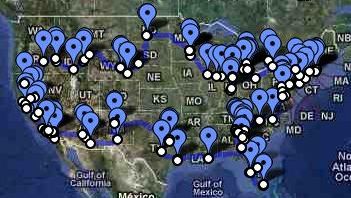
Registry Road Trip route, May to October 2010. See larger scale map below. |
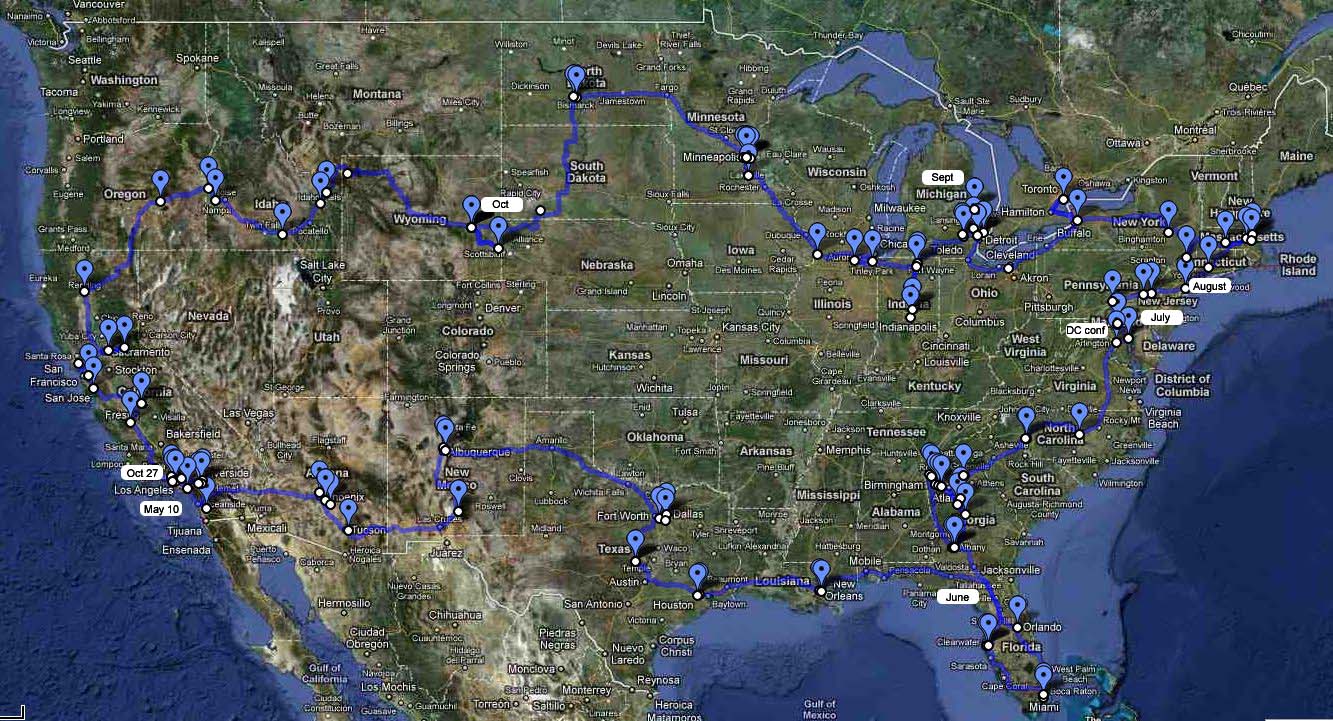
For five and a half months, I drove 15,000 miles on a circular route around the United States. Starting in Los Angeles, I first crossed the southern states to Florida, then went up the East Coast to DC for the RSOL conference at the end of June. After heading up to New England, I then started back west across the northern states, and then down the Pacific Coast to return to LA. I drove through 31 states and had meetings in 22 of them, plus DC and Ontario, Canada. All in all, there were 113 meetings, in which I interviewed 205 people, including 86 who had been prosecuted for sex crimes, 77 of whom were on the registry. The interviews also included seven people who admitted to committing sex crimes for which they were not prosecuted, 74 parents and other immediate relatives of people prosecuted for sex crimes, and 15 people designated as victims (whether they agreed with that designation or not). The people interviewed included 15 pedophiles (people with a predominant sexual attraction to children), as well as 21 people who were juveniles (under 18) at the time of their sex crimes. Those included six who were still under 18 at the time of the interview; the youngest, wearing a GPS tracking device on his ankle, was 13.
After the conference, a preliminary report of observations was prepared and posted here. While a final report was planned for shortly after completing the trip, various circumstances, together with the enormity of the experience, conspired to delay that for over a year. Finally, in August 2012, it is ready.
This report only briefly mentions some of the people encountered. A good deal more work is needed to go back through 165 hours of recorded interviews and relay the stories of these registered people, their families, and people designated as their victims. These are stories of the intense personal struggle of the social outcast, as well as of those who may love him or her: the guilt, shame, fear, economic hardship, and occasional triumphs. However, a proper account of these lives will have to wait. In the mean time, general observations and brief descriptions are presented here to paint a picture of the registry and of the people who are on it. Near the end, in the section, So, What Now?, is some discussion of what may come next in this project studying the phenomenon of the sex crime registry.
The Interviews
People on the Registry and Family Members
For most of the interviews, there were two basic questions:
- Please tell me about what happened that led to you (or your son, husband, etc.) being on the registry.
- How has this affected your life?
Although trained as a scientist, I did not plan this research as a scientific investigation. The freeform nature of the interviews did not impose the kind of structure that would ensure collection of comparable information from one to the next. There was also nothing to ensure that the answers people gave and the stories they told were true. I did not hold back in questioning, and when things did not add up, I would ask for clarification. I generally asked people for legal and other documents that would validate what they told me; a few complied, but most said they had none or promised to send something and didn’t follow through. I had the general impression that people were being forthright with me, but if I was conned by half the people I spoke with, I will likely never know.
Listening critically for people who would twist things to make themselves look good, it usually seemed that when things didn’t make sense, it was the other way around. While there were people who claimed that the charged crimes never took place, they were in the vast minority. Most told me about what had happened with a clear sense of shame, guilt, and apology. I often had the impression that I was hearing versions of a story that people had been trained by years of “therapy” to recount, in which they made themselves out to be villainous devils, even when the details of the story didn’t support that evaluation. Perhaps the villainous details were left out, but as the people interviewed could tell you, I was not shy about drilling for information to complete the picture.
There was one interview in which the story changed dramatically under intense questioning. This was in one of the two states where I knocked on doors of people who had been convicted of sex crimes as juveniles. The young man whose name I’d downloaded from the registry walked me past a family gathering in the yard of a large suburban home, and took me to the garage, where he allowed me to set up my camera for an interview.
He said at first he didn’t want to talk about the details of what happened, but I told him that without going into pornographic descriptions, some information about what happened was important. He complied and said that at 13, his stepfather accused him of having anal intercourse with the man’s seven-year-old son. At first he told me it wasn’t true, but later he said he really didn’t remember what went on back then. I asked if it was possible that he ever played doctor with his stepbrothers. He said it was possible. I asked, if they had played doctor, was it possible that he had “done something with their asses” and then was it possible that he had “put your penis in his ass.” He said that was also possible. Then I asked, if he had been playing doctor with them, would it have been mutual horseplay or would he have been pushing them around. He said it would be the latter because when he did play with them, he was always mean to them. For the rest of the interview, the original denial was abandoned, and the actions he had been charged with were discussed as events that had actually taken place.
Was this young man going along with my questions in order to create a scenario he thought I wanted to hear, when in truth he did not rape his stepbrother? Or did I in fact uncover a truth that was at first withheld? I will never know for sure, but in most of the interviews, there were no such changes, the details added up, and the stories had a logical consistency that rang true.
Hearing from the Victims
Besides the people on the registry, there is one other group that knows the truth of what happened in the cases at hand. After the police have completed their investigations and the psychologists have done their assessments, it is only the people identified as victims who really know if the stories registrants told me were true or not. Unfortunately, the law makes it very difficult to find them. There are usually severe penalties if people convicted of sex crimes or their families ever try to contact the accusers. In many cases, even when the designated victims were close relatives, the people I met with had not seen them, nor heard any news of them, since the time the charges were filed.
Despite this barrier, I did manage to find and interview five people on this trip who were designated as the victims of sex crimes. Two of them, both women, agreed with that designation, but the other three did not. One woman swore emphatically that her brother, who’d been accused of raping her, never touched her sexually, and complained that no one even asked her what had happened. (For more on this case, see “six-year-old tomboy” below, under Child Sex Criminals.) Another woman complained bitterly that when she was 15, her 21-year-old fiancé, the only man she’s ever loved, was torn away from her and sent to prison. And a bisexual man spoke glowingly of the adult man he propositioned when he was 14, with whom he rekindled his relationship when the older man was released from prison. In addition, on this trip, I also found and interviewed another ten people (eight men and two women) who could have been designated as victims, had their adult partners in sexual activity when they were juveniles been prosecuted. Only one of them, a man, said it was abusive and unwelcome. Some were ambivalent about their teenage sexual experiences, but most spoke of them as fond memories.
The interviews with designated victims and could-be designated victims were even more freeform than those with registered people and their families. These people seem to live with as much shame as their counterparts on the registry. Especially if they don’t agree that they are victims, they are very afraid to speak publicly about what happened and how they feel about it. For the most part, when I met these people, I wanted to give them an opportunity to tell their stories from their own perspectives without judgment, an opportunity which many of them said they’d never had before.
No Longer Impartial
This report appears on the website, SOL Research, which was started in order to document research under way since 2007 about sex laws and their effects on people and society. My intention in this research was to use my skill as a scientist to gather information and present it impartially, to present the facts and let the facts speak for themselves. I was already suspicious that all was not well with the source and implementation of the registry and related laws, but I was committed to looking at the matter dispassionately and letting the truth emerge with the facts.
By the time I started my road trip, after almost three years of this research, it was already hard to maintain a stance of impartiality. I had seen too many pictures of children on the registry, read too many cases of convictions overturned because prosecutors had falsified evidence, received too many e-mails from young ladies asking if I could help them get permission to contact their boyfriends in prison. It was pretty clear by this time that all was not well, but as I set off on my trip, I still did my best to be the objective scientist, eager to observe what was going on with my own eyes and leave conclusions to be drawn based on what I would see.
On publishing this report, I have to admit that I am no longer impartial. What I observed on this trip has affected me too deeply. I am still committed, of course, to presenting correct and complete information. But I would only be pretending if I claimed to be objectively reporting on facts here without a strong moral stance on the circumstances. It is clear to me now that however well-intentioned US sex laws may be, they in fact often traumatize the very youngsters they are supposed to protect. This trauma takes place in three ways:
- Criminal prosecution, with incarceration and registration, of children and teenagers for consensual sexual activity with their peers. See Child Sex Criminals, below, as well as the previous SOLR report on Criminalizing Child’s Play.
- Paying no attention to the feelings or opinions of young people when prosecuting someone older involved in a sexual relationship with them. See Hearing from the Victims, above.
- Severe adverse effects of the registry on the children of people who are on it. I only had an opportunity to interview four such children in three families, and I refer interested readers to the comprehensive study (2°, ☀) on this subject by Jill Levenson and Richard Tewksbury.5
So, no, I can no longer claim to be an impartial observer on this subject. The reader may judge the merit of what is found here in that light.
Confidentiality
Interviews were conducted with my solemn assurance of confidentiality and anonymity. Anonymity means that I will not reveal the identity of any person that I’ve interviewed unless he or she has given me explicit permission to do so either in writing (including via e-mail) or in the audio or video recording of the interview. Confidentiality means that I won’t disclose any private information given in an interview, whether it identifies the person or not, without the same sort of permission. All people interviewed were told that I may write about their cases at some point, but that if I do so, all names and other personal details will be changed as necessary to conceal the identities of all people involved. The only exception is for people who have published identified accounts of the matters discussed. Therefore, with that exception, photographs or names of people I met with on this trip that appear in this report do so with explicit permission.
Observations
Communities
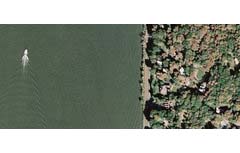
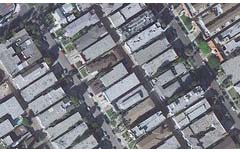
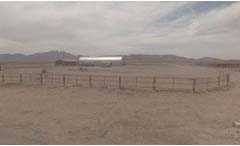
My travels took me to a stunning variety of environments to meet with people of vastly different lifestyles. Most meetings were held in the homes of the people interviewed, in neighborhoods that ranged from quiet suburban alcoves to a hillside, waterfront mansion, to isolated farmsteads in the middle of nowhere, to crowded city apartment blocks, to prisons, and to people with no roofs over their heads at all. More information on the economic diversity of the people visited is provided in the table of economic classes in the Statistics section, below.


|

|


|
|
Aerial or street-level photographs showing the variety of homes visited: (left-to-right, top-to-bottom) Riverside mansion, two suburban homes, apartment tower, urban cluster of apartment houses, two farms, and a juvenile prison. (Identifiable photos used with permission. Photos courtesy of Google Maps.) See also below for photos of homeless visits. |
One of the most startling observations on this trip was an entire community of registered people, about a hundred men living together in a mobile home park where they feel safe from the glaring stares of the outside world. The place is run by Florida Justice Transitions, which coordinates shared accommodations in single-wide trailers with other services, such as treatment sessions, polygraph testing, Alcoholic Anonymous meetings, optional religious services, and assistance getting social security cards and other documentation. They take applications from men in prison who need a place to go when they are released.
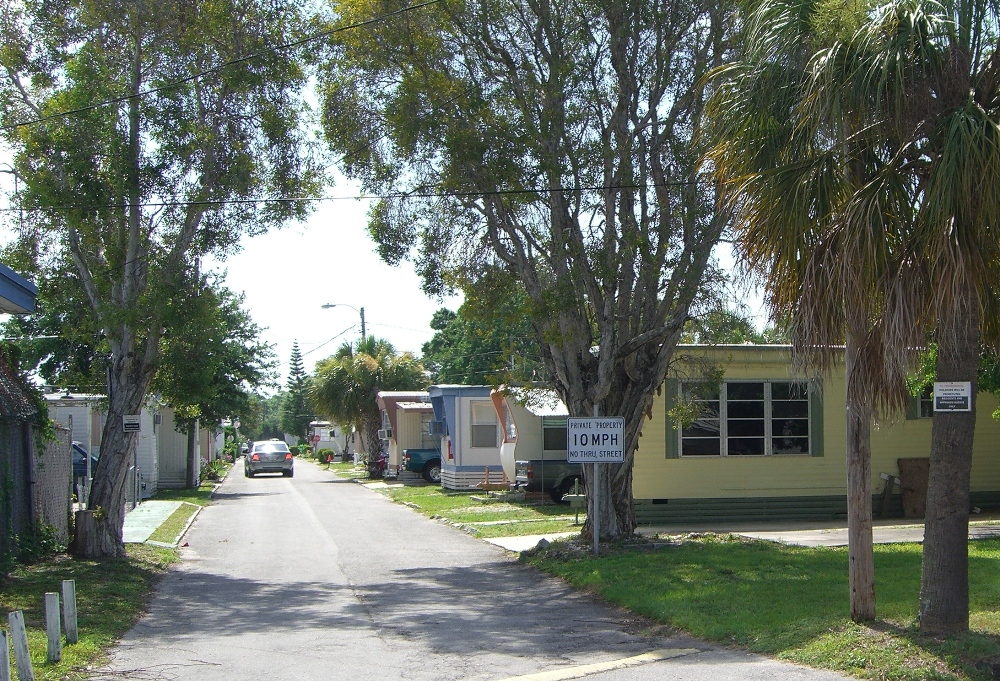
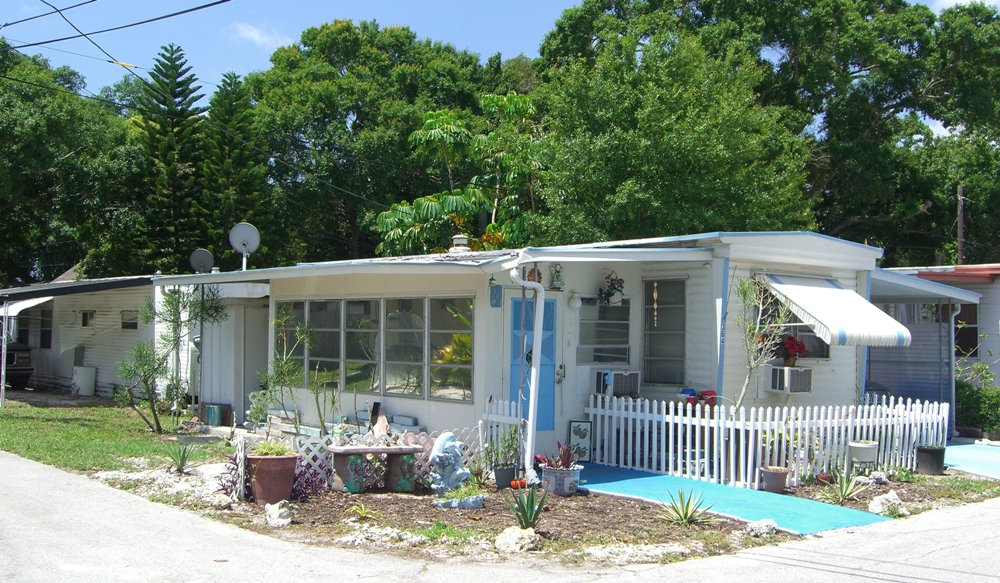

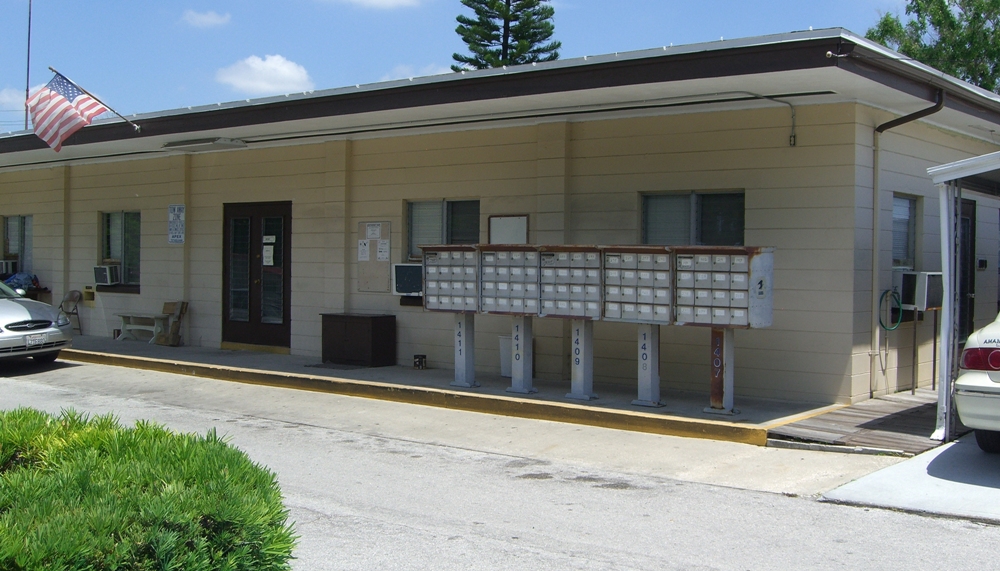
|
|
The mobile home park of Florida Justice Transitions. Clockwise from top left: Entrance. A residence. Clubhouse. Basketball court. (Click each picture to view larger.) |
It was a strange feeling walking around this place. It is essentially a leper colony, a ghetto for sex criminals. Women are rarely seen, and children, never. Yet there was a certain serenity about it. It seems that for men who feel ostracized in the general community, this is a place of comfort, where people understand each other, and quietly support each other. On the day that I was there, when I left to get lunch, I saw a young man walking across the street to the convenience store, a GPS tracking unit clearly visible on his ankle. What a difference the boundary of this place must be for him, I thought. Outside, he is a suspicious threat; inside, he is among peers.
I’d heard this place described before as a community of pedophiles, and I wondered what kind of men lived there. I only conducted one in-depth interview there, so I didn’t get to know many of the men very well. But I did get to observe a treatment session and to have some conversations with a few men. From this, I at least learned the nature of the crimes that several are there for, at least as they described them:
- When one man was 18 and drunk at a party, he allowed a 12-year-old girl to put his hand in her pants. (Yes, the pronouns are correct — he allowed her to put his hand in her pants.)
- After a sleepover of 30 of his children’s friends at a man’s home, one of the girls said that he had touched her crotch. He was drunk and doesn’t remember doing it, but he told me that if she said so, then it must have happened.
- A man who acknowledged having been a pedophile was caught soliciting sex online from a police officer acting as a juvenile and was also charged with possession of child pornography.
- A man who went online seeking ideas for dealing with problems with his teenage son, chatted with what he believed was a 14-year-old boy and arranged to meet him. He says he had no sexual intentions whatsoever, but because the “boy” (actually a police officer) had said that his uncle sometimes masturbated him and he liked it, the chat was considered a sexual solicitation.
- A man in his 30s was dating a 17-year-old girl he’d been introduced to by her mother. They had sex one time before she turned 18. Two years later, when they were engaged to be married, a family feud brought out the previous illegal nature of the relationship.
- A man was watching adult pornography and masturbating at 2 am when a seven-year-old girl, a friend of his daughter’s who was sleeping over, walked into his room. He didn’t stop masturbating when he saw her. He told me that he didn’t touch her but was falsely accused of fingering her vagina. He spent three years in prison and eight in civil commitment.
- A gay man engaged in consensual sexual activity with a mentally retarded, adult, male friend of his family. (In most states, mentally retarded individuals, like children, do not have the legal capacity to consent to sex, and thus any sexual activity with them is always illegal.)
- A 26-year-old man had had a 15-year-old girlfriend when he was 23, for which he spent two years in prison.
- One man forcibly raped an adult woman and spent 18 years in prison for it.
Child Sex Criminals
| |
|
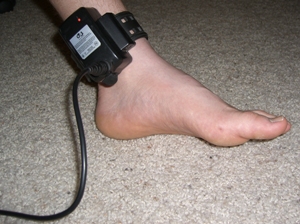
GPS tracking device on ankle of 13-year-old boy. The cable is charging the battery, for which it must be plugged in every day for an hour. |
We are told that the purpose of the sex laws is to protect children, so it is most troubling when we see children suffering as a result of those laws. Twenty-one of my interviews were with people who had been charged with sex crimes when they were themselves juveniles (i.e., under 18). Six of them were still under 18 at the time that of the interview. (They were fairly evenly spread out in age. One was 13, two were 14, and the others were 15, 16, and 17.) Four additional interviews were with parents of juveniles charged with sex crimes. All 25 of the juveniles in these cases were male.
It’s important not to assume that because the accused were young, they were just innocent, playful children. Eight of the 25 juvenile cases involved allegations of use of force. As discussed in The Interviews, above, one young man started out saying he’d been falsely charged at age 13. But as we talked at greater length, he admitted that it was “possible” that he had played sexually with the younger boy, that if he played sexually with him, it was possible that he anally penetrated him, and that since he was usually cruel to the boy in other ways, that it was probably done against his will. It took a while to sink in that this man was essentially admitting to me that when he was a young teenager he had raped a seven-year-old boy.

| |
|
Patriotic expressions of a seven-year-old boy. Seven years later, I found this in his case file as he was behind bars on dubious charges of sex play with his stepbrother. |
Just as with any legal case, unfortunately, it’s also important not to assume that a conviction means the crime actually took place. In eight of the 25 juvenile cases, the people interviewed claimed the charges were false. In the most poignant of these, the people interviewed included the alleged victim herself. She told me that she was a six-year-old tomboy when she took a fall that caused bleeding in her crotch. Her 13-year-old brother took care of her and cleaned her up. When a school nurse saw the bleeding and counselors asked if her brother had “touched” her, the little girl answered, “Yes,” referring to the care he had given her. But school officials interpreted her answer differently and her brother spent the rest of his youth in jail for allegedly raping her. She didn’t see him again for over 15 years. She is now trying to help him get off the registry. It’s always hard to know whether a recanting victim is telling the truth or making up a new story to protect the guilty, but what she said to me was haunting. She told me that I was the first person who ever asked her what actually happened that day.
So juvenile cases, just like adult ones, can involve force and can involve claims of false accusations. But in ten of the 25 juvenile cases covered by my interviews, people told me straightforwardly about sexual activities they engaged in when they were kids — either with younger kids or, in one case, with an older, but mentally slow, child — where there had been no allegation of force being involved. In general, I didn’t hear people making excuses for their behavior or claiming they’d done nothing wrong, and many acknowledged the power imbalance that existed because of the difference in age or intellect. The crimes in these ten cases were, as described by the people who committed them (or by the mother in one of the cases):
- A nine-year-old boy was prosecuted and later put on the registry for mutual sexual touching with his 12-year-old, mentally slow, female cousin.
- A twelve-year-old boy offered his half-sister, six, some candy if she would show him her vagina. She showed it to him, and then he showed her his penis. He spent a month in juvenile jail awaiting trial, then took a plea deal for 20 years of probation. He is on the public registry.
- A 13-year-old boy was prosecuted for sexual battery for slapping a girl’s buttocks in school, but was not handed harsh consequences. Later, while still 13, he was caught sucking the penis of his four-year-old nephew. For the second incident, he spent the next five years in juvenile jail, after which he was put on probation for ten years and on the public registry for the rest of his life.
- A 13-year-old boy visited the home of a friend, an 11-year-old girl. They went to her room and “made out,” in which they both took their pants down and touched each other’s genitals. He spent 2½ years in juvenile jail and will be on probation until he is 33. He is on the public registry.
- A 13-year-old boy played a game of truth or dare with a group of boys and girls from age seven to 18, in which an eleven-year-old girl gave him oral sex. He spent 1½ years in juvenile jail, after which he was put on the public registry.
- A 13-year-old boy engaged in touching the vaginal areas, buttocks, and breasts of two younger, female cousins. This went on for about two years until he asked one of them to suck his penis, after which she told her mother. He spent several years in juvenile jail for this before I interviewed him at age 16. He is scheduled to be on the registry until he turns 21.
- A 14-year-old boy was discovered to be having sex with several girls about his own age. For this, he spent seven years in juvenile prison and is on the registry.
- A 16-year-old boy was walking on a wooded trail near his home when an eleven-year-old girl that he knew came up and asked if she could give him oral sex. He agreed, and she did it for about five seconds and then stopped. He was sentenced to a youth detention camp (“boot camp”) and is now on the public registry.
- A 16-year-old boy dated a girl a year and a half younger than him, and after several months they became sexually involved. Twenty-three years old at the time of our interview, he was not allowed any contact with his own infant son because of being on the registry.
- A 17-year-old boy had mutual masturbation with and gave oral sex to two young male friends, eleven and twelve years old. He was sentenced to ten years of probation and is on the public registry.

| |
|
Boy’s chastity device, circa 1871..1930, used to prevent masturbation (Science Museum, London). |
What is wrong with this picture? As I interviewed more and more boys on the registry and men who are on it for things they did as boys, I kept thinking about the horrific ways our society used to deal with masturbation.
In the 1800s, there was a frenzy throughout America and Europe about protecting adolescent boys from the dangers of masturbation. The warnings applied to everybody, but attention was focused on boys, who were deemed most vulnerable to the “disease” (and who also, by the way, did not have the power to decline treatment for it). Masturbation was described as the “besetting trial of our boys.”6 Infants who played with themselves in the crib had their hands and legs tied down.7 Older boys resistant to being “cured” of the habit had leeches and blisters8 applied to the neck and anus,9 had their genitals bandaged,10 caged,11 circumcised,12 infibulated,13 sewn shut,14 or cauterized,15 or even had their nerves severed completely.16 When none of those procedures sufficed, castration was advocated,17and castration was performed.18
Some boys were so terrified by the medical preaching of the day that they attempted their own amputations. A 15-year-old in Massachusetts shot his penis with a pistol in 1886. His doctor seemed to approve of the boy’s “self-treatment.”19 Three years later in Britain, a 19-year-old cut off one of his testicles with a knife, again to no apparent disapproval from the medical profession.20
One would like to think we are more enlightened about youth sexuality now than in the 1800s. In most parts of our society, we no longer give kids terrifying messages about sex but teach them that it is a natural part of life. However, it is disturbing that, although we no longer physically torture and mutilate children who play with themselves, when pairs of kids play sexually with each other, we now throw the older one in jail and then stigmatize him or her with a listing on the registry, often for rest of his or her life. And we do this without ever warning kids that this can happen and without providing any sort of instruction or suggestions on how to deal with their rising libidos so they won’t get in trouble. We simply leave it to kids to figure out sex on their own and then viciously punish them if they check it out with a younger friend.
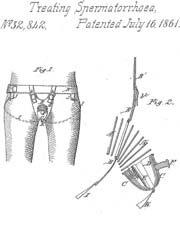

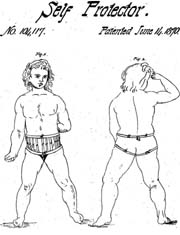
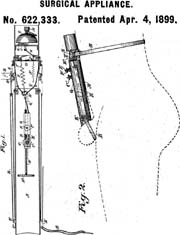

|
|
American ingenuity at work in the service of public chastity. (Click each image to see the full patent.) Although it is commonly believed that chastity devices were historically used on women, a search of all US patents categorized under Sexual restraints brings up primarily devices designed for males, both human and horses. (The subcategory exclusively for females, Intravaginal antirape devices, has no patents from before 1923.) |
Branding

| |
|
Special driver’s license issued to registered people in Louisiana. |
One thing I was looking for on this trip was evidence of the lengths to which the government goes to shame people on the registry, besides placing their pictures and addresses on a public website. I found some poignant examples across the country.
In Louisiana, registered people are issued a special driver’s license with “Sex Offender” in large, red type under the picture. It’s hard to imagine what it must be like to present such an ID to a clerk at the grocery store.
In a small town, a young gay man told me that in his early 20s he gave oral sex to a fellow who claimed to be 18 years old but was actually 15. When he was convicted for this, his probation officer required him to make a sign to warn people away and post it on the lawn of his mother’s home where he lived. He had completed probation when I visited him, and he showed me the sign leaning backwards against a tree in his backyard. He told me he wants to get rid of it, but his probation officer told him he had to keep it. A probation officer presumably has no further jurisdiction over a man once he is off probation, but this man apparently continues to live in fear of violating the officer’s orders.
|
|
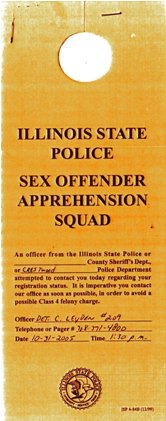
Left: Sign made by a young man in a small town and displayed on his lawn on orders from his probation officer. Right: Notice hung on door knob of home of registered person in Illinois on Halloween. |
In Illinois, a man showed me a notice that had been hung on his door knob by the state police when they came for a routine check on Halloween and didn’t find him at home. Printed on bright orange paper, the notice said it was from the “SEX OFFENDER APPREHENSION SQUAD,” as if the man was a fugitive evading capture.
Homelessness and Prosperity
Another thing I looked out for on the trip was how people were affected financially by being on the registry. Most people complained of great difficulty finding and keeping employment, and some told stories of being accepted for a job only to get a phone call after the company had done a background check, telling them not to bother showing up.
Before my trip, I’d heard of people thrown into homelessness by being on the registry. One of my first meetings was with a man in California who had contacted me earlier through this website. When I met with him, it turned out that he was living out of his immobile car parked in a shopping center parking lot. It seemed there must be more people in his circumstances, but how would I find them? In the years before my trip, Florida had achieved some notoriety for a group of registered people living under a bridge in Miami.21 That encampment was broken up a few months before I set out, and I wondered what had become of the people who had lived there. With the help of David Lind at Pure Mercy, I found out.
The men who lived under the bridge weren’t there because they chose that place on their own. When Miami introduced strict residency restrictions on registered people, it became illegal for them to reside almost anywhere in the jurisdiction. While some people on the registry were able to relocate out of the area, those on probation or parole did not have that freedom. So it was probation and parole officers who first started instructing their charges to go live under the bridge. It was one of the few places in all of Miami that was far enough from schools and parks that it was permitted by the residency restrictions on registered people. No matter that there were no structures, no power, no heating, and no sewage available. Those were problems for the registered people assigned to live there to figure out.
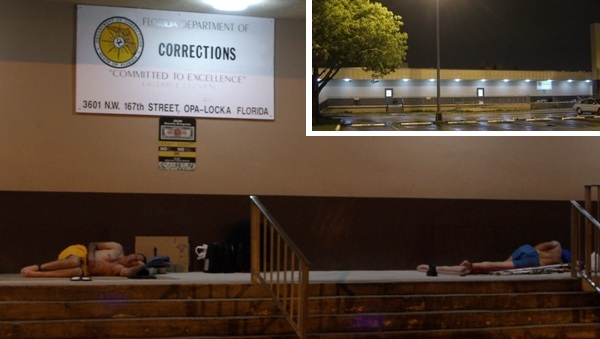
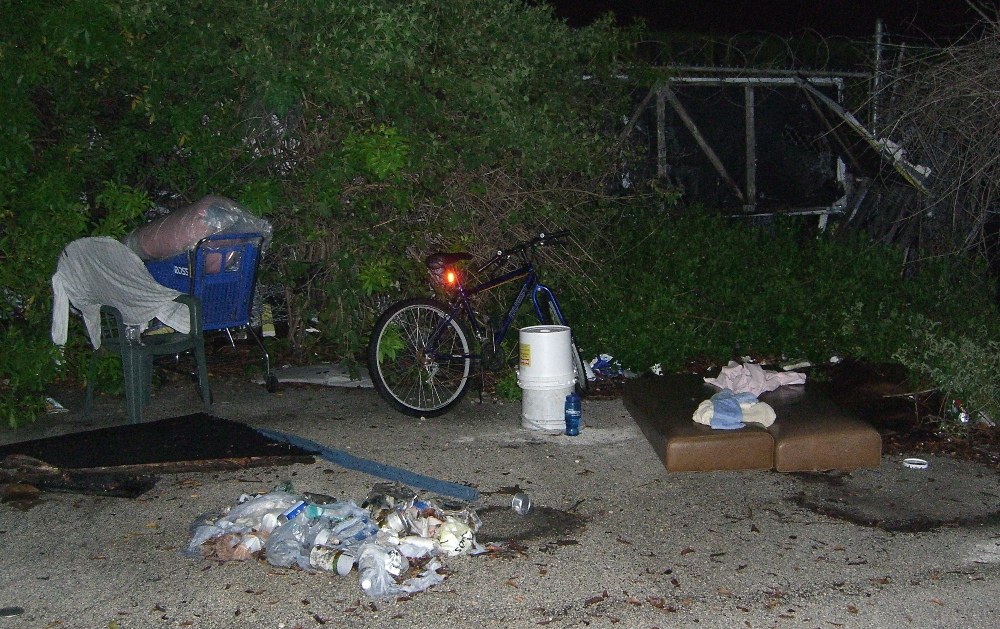
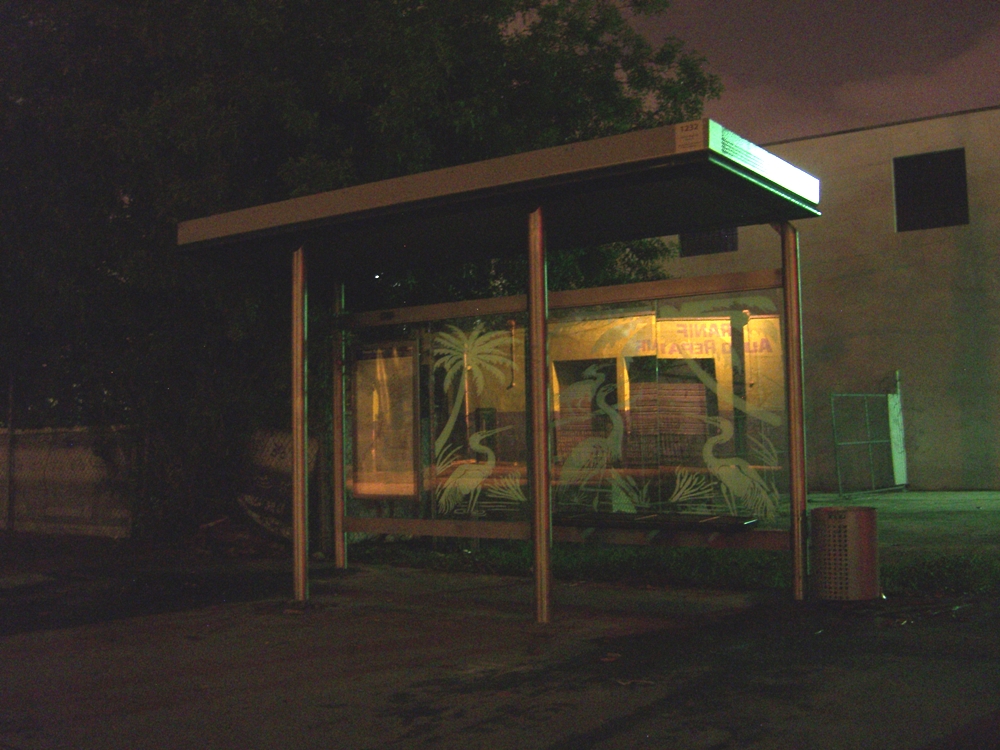
When the bridge encampment attracted international publicity, the government closed it down. This meant that probation and parole officers had to find new places to assign their clients to live. I was able to visit two such places. One was the front steps of the probation and parole office itself, where several men have been assigned. The other was a corner of a warehouse parking lot in an industrial area a few miles away, where a man was assigned alone. For the second place, when it rains the man sits in the nearby bus shelter.
|
|
The Florida Department of Correction’s slogan, Commitment to Excellence, is underscored by two parolees sleeping on its doorstep, the location assigned to them as their residence by their parole officers. The sign and men are at the far right side of the building in the inset in the top-right corner of the photograph. If you look closely you can see another man sitting up next to the left-hand entrance to the building. |
|
|
Left: Encampment of registered man in the corner of an industrial parking lot, the residence assigned to him by his parole officer. Right: Bus shelter available for the man when it rains. (Click each picture to view larger.) |
Some people have been able to rise above the oppressive circumstances of the registry and acquire a certain amount of financial success. I interviewed a few such people on my trip. Most were modestly successful businessmen before being arrested on sex charges. They lost their businesses when they went to prison, but they were able to apply their skills to starting over when they got out. One was resourceful enough to take advantage of his special knowledge of the circumstances of registered people and their difficulty finding housing, and he started a business acquiring residential properties and renting rooms in them to other registered people. Another man used his previous experience to start a contracting business that now employs three other people. After interviewing him, I spent the next day tagging along to his work sites. It appeared to me that both his employees and his clients, as well as other people in the community, like him and hold him in high regard. One young man he recently hired considers him an important mentor and told me that the fact he is on the registry is a reason to mistrust the government.
Activism
On most of the trip, I arranged meetings with people individually. But in some cases, I instead attended meetings set up independently of me, where I was just an observer. These meetings were very interesting. I had never been to a meeting of “registry activists” before, and while this trip was set up to get me to what I thought would be my first one, the national RSOL conference in Washington, I found myself sitting in on two meetings of RSOL state chapters before I got there and another one afterwards.
| ||
|
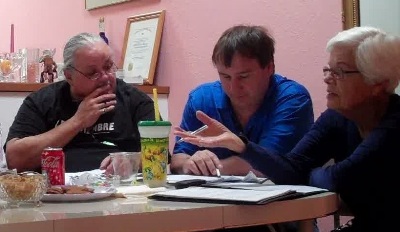
Staff meeting of Citizens for Change – New Mexico in Albuquerque, May 2010. Left to right: Don, Lloyd Swartz, Alice Benson. |
New Mexico. In Albuquerque, I actually attended two meetings. On a Saturday, there was a staff meeting, where six organizers of Citizens for Change – New Mexico discussed strategy and upcoming activities. The general meeting on the following day, attended by about 15 people, got into more details on work to be done by individuals. It was fascinating to hear about their successful work in lobbying the state legislature in order to stop passage of proposed new measures against registered people. One item on the agenda at this meeting was discussion of actions to be taken in response to a letter recently mailed (☀) to registered people in Albuquerque, notifying them of new restrictions on their use of the public libraries.22
In addition to observing the business of these meetings, I was able to arrange to conduct four in-depth interviews with members of the organization. Two of these interviews were with individuals who are themselves on the registry. One of them is included in the list of juvenile cases above. The other was a man who had fondled the breasts of his eleven-year-old stepdaughter. Another interview was with the parents of a man who is in prison for what they say was a false accusation by his ex-wife of sexually touching her daughter. The fourth interview was with the widow of a minister who got involved in this issue after she kept up the visits that her late husband had been making to a parishioner who was in prison for sexual activity with his daughter. In addition to these interviews, the organizers of the general meeting went around the room and asked people who were willing to briefly tell their stories of why they were there.
A short time after my visit to Albuquerque, CFC-NM split into two organizations. One of them kept the name, CFC – New Mexico, and emphasizes emotional and spiritual support of people adversely affected by harsh sex laws. The other took on the name, RSOL – New Mexico, and is focused primarily on legislative action to change those laws. It so happens that the three people in the photograph above are the ones that started RSOL-NM, so that photograph is now also a picture of the organizers of that new group.
| |
|
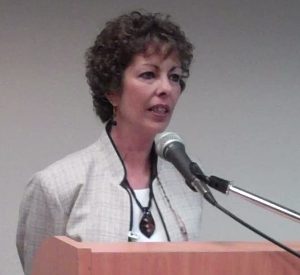
Mary Sue, coordinator of Texas Voices, opens their first Houston meeting in May 2010. |
Texas. The timing worked out for me to be in Houston when Texas Voices was holding its first meeting in that part of the state. This was no small get-together. More than 100 people filled a hotel meeting room to capacity to learn about the activities of this organization in lobbying the state legislature to vote down proposed new measures against registered people. People attending were provided with a handout of materials that included:
- Texas Voices: Pursuing Balanced Sex Offender Laws to Better Serve Public Safety (☀), a flier explaining the principles and objectives of the organization
- Talking / Writing Points Phrases (☀)
- Interim Study (☀), suggested materials for members to use in writing to politicians
- Sample letters to politicians (☀)
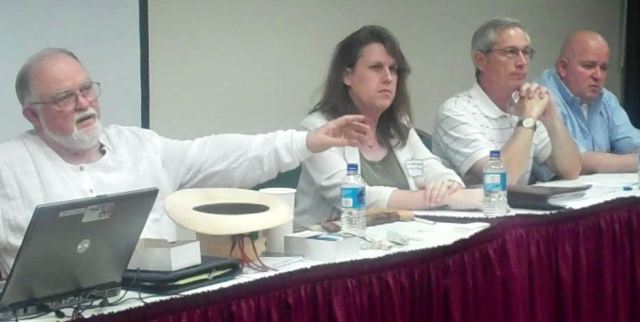
After discussing the work of the organization, the second half of the meeting was dedicated to legal matters of registered people and people on parole for sex crimes. First, attorney Bill Habern23 gave a talk about his many years of tireless work on this issue. Then he and a panel of lawyers from his firm went into more legal specifics and took questions from the audience.
|
|
Legal panel from the firm of Habern, O’Neil, & Pawgan at Texas Voices meeting in Houston in May 2010: Bill Habern, Michelle Belanger (legal assistant), David O’Neil, Scott Pawgan. |
As in Albuquerque, I conducted four interviews in connection with this meeting. One was with the parents of a man who is in prison on a probation violation from his case of having consensual sex with a 15-year-old girl when he was 23. Under his probation conditions, he was not allowed to leave his county of residence to be at his son’s birth, and he has never been allowed to see his son. Another was with the parents of a man who is on parole after spending 1½ years in jail for a series of sexually explicit chats online with a 15-year-old girl when he was 22. The third came about from a serendipitous meeting in the hotel lobby after wrapping up the previous interview and is described below under An Advocate for Harsher Laws. The last interview was with the first of only two women on the registry that I interviewed on the trip, who is there because she gave oral sex to two teenage boys.
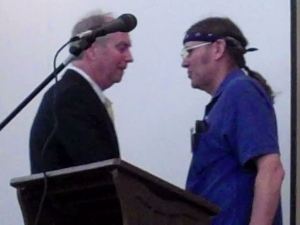
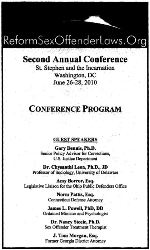
The second annual conference of Reform Sex Offender Laws (RSOL) was held at St. Stephen and the Incarnation Episcopal Church in Washington, DC, at the end of June. St. Stephen’s Church has a history of openness and inclusiveness, having been the first racially integrated Episcopal church in Washington in the 1950s, and in 1974, the first Episcopal church in the US to have a woman priest lead a public service.24 Since we were meeting in a church, we had an unusual conference schedule that included all day Saturday, but was limited to the afternoon on Sunday. One hundred people attended from 25 US states.25 The weekend program was supplemented with a day of lobbying Congress on the following Monday.
The line-up of speakers was impressive. I wouldn’t expect to find at an activist conference a representative of the US Justice Department or a former prosecutor who helped to write the laws that the people were gathered to work against. But the appearance of Gary Dennis and Tom Morgan showed that there are people in (or formerly in) the government who understand that these laws are not working as intended. Sociology professor Chrysanthi Leon spoke (☀) about her research on sex crime and the ineffectiveness of the registry and other measures in place to deter it.26 Amy Borror from the office of the Ohio Public Defender offered pointers (☀) on lobbying Congress about registration.27 Connecticut defense attorney Norm Pattis excited the crowd by railing against unconstitutional laws and suggesting strategies (☀) both for defending individual cases and working for broader changes in the laws as they currently stand.28 The packet of materials provided to participants included a useful collection of information on sex laws. These were helpful both to novices who needed to learn the basics themselves and for state organizers who needed materials for educating their own new members as well as members of the public. |
 (
(
 (☀) (☀)
 (☀) (☀)
 (☀) (☀)
 (☀) (☀)
 (☀) (☀) |
- The Adam Walsh Act: A Disaster in the Making (☀), Sex Offender Solutions & Education Network (Link. Brochure)
- Facts!: Regarding Sex Offender Issues (☀), Sex Offender Solutions & Education Network (Brochure)
- My Family IS Just Like Your Family (☀), Sex Offender Solutions & Education Network (Brochure)
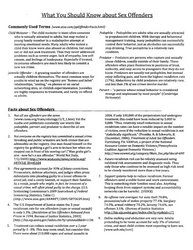
- What You Should Know about Sex Offenders (☀), Reform Sex Offender Laws
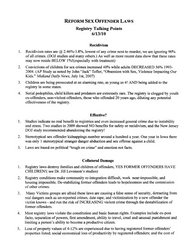
- Registry Talking Points (☀), Reform Sex Offender Laws, June 13, 2010
|
The packet of materials used in lobbying meetings on Monday was the same as the conference packet, plus an additional CD. This CD was such a useful collection of information that I provide a separate background report about it. |
 |
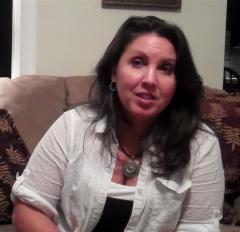
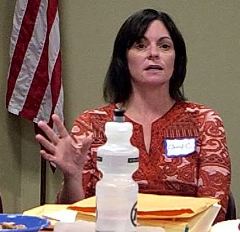
Michigan. After the national conference, I had the opportunity to attend one more activist meeting on the trip. As I rolled back westward across the northern states, Francie Baldino gave me a date that I could attend a meeting of the group, Michigan Citizens for Justice, in Detroit. When I arrived at the public library, I was surprised that Francie turned the entire meeting over to me to hear from the 29 people there. I quickly discussed permission to record the meeting on video, and we divided the room so that those who did not want to appear could sit outside the view of the camera. The stories I heard included:
- The wife of a clergyman had sex with a 15-year-old boy in the congregation’s community.
- A woman talked about her son, who was an athletic coach when he had a sexually oriented text exchange with a girl on his team.
- A woman spoke about her 13-year-old son, who was being prosecuted on accusations of getting and giving oral sex with a six-year-old girl.
- A man said he was at a party when a 14-year-old girl came on to him and he fondled her.
- A woman spoke about her son, who was 21 or 22 when he was accused of having anal intercourse with an eight-year-old girl.
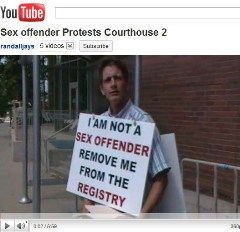
- Randall Saunders said that when he was 19 years old, he was in a special education class for the emotionally disturbed. With him in the class was a 19-year-old girl. They got to know each other, and they eventually had sex. No one had ever told him this, but this girl was not allowed to consent to having sex because she was mildly retarded. He was prosecuted for their relationship. Coincidentally, Randall had just posted four protest videos on YouTube in the days before this meeting, in which he discussed the injustice of his case and the way he is being treated.
- A man and woman talked about their son, who was one of three 17- and 18-year-old boys who were partying with a 17-year-old girl who gave oral sex to one of them and spent the night with another. Both boys were prosecuted.
- Three sisters spoke about their brother, who is in prison for looking at child pornography on a website monitored by the FBI.
- A woman spoke about her son, who was 18 when he was prosecuted for having sex with an 18-year-old girl when they were drunk.
- A woman spoke about her son, who was 17 when he was prosecuted for drawing circles with a marking pen around the nipples of a 16-year-old girl who was passed out drunk at a party.
- A man spoke of having gone to prison after making arrangements online to meet a woman who was offering herself and her young daughters to have sex with him. The “woman” turned out to be a policeman running a sting.
|
|
Participants in meeting of Michigan Citizens for Justice, Detroit, in August 2010. Left to right: Group organizer Francie Baldino, attorney Cheryl Carpenter,29 and Randall Saunders in his second YouTube protest video, posted just days before the meeting. |
An Advocate for Harsher Laws

| |
|
Karen Kristopher of Centers for Decency |
In Houston, I had the opportunity to meet Karen Kristopher, a woman who works on the issue of sex crime from a different perspective than most other people I met with on this trip. She is the only person I’ve met who actively advocates for a stricter registry, but it was about time that I met her because she appears to represent at least an important segment of the public viewpoint, if not the vast majority. I was anxious to interview her because, although no longer impartial, I don’t want to blindly promote one particular point of view but am still committed to examining all sides of the issue and reporting factual information. I don’t think I can do Ms. Kristopher justice by interpreting what she said, so I will just excerpt from her remarks and let them stand on their own. The following is an edited summary; please see the verbatim transcript for more details.
I’m with Centers for Decency and I’m also the founder of the Houston-Area Association for Decency.
I think the sex offender registry is a valuable tool. I’ve been dealing with the real estate brokers in Houston about when they sell a piece of property and disclose the rate of the sex offenders near the home, when there’s little girls in the family, little children. It has its place, certainly. I think it’s an indicator of what’s happening in that neighborhood. But there is no neighborhood, no zip code, in Houston, that is without a sex offender.
The bigger problem is the sex predators that have not been caught, and they’re everywhere. The 700,000 people on the registry, that’s just a tiny part of the number of sex predators that are roaming across this country. Those who are not convicted of a sex crime yet. They are just out there. They attack their victims, on average, 113 times before they’re arrested the first time.
[I asked if she knows how many such people there are.] No. It’s just countless. What they usually do, they start with women their own age, and they get younger and younger. This is what’s happening.
At Centers for Decency, we’re trying to promote morality and decency. We’re hoping to have stronger family values because it’s strong family values that is keeping this country together, and if that unravels, then the United States of America will have more cultural decline, and cultural decline is not good for the fellas or the girls, or anyone. We all have a lot to address.
Some Notes on the Trip
A Tale of Two States
| ||
|
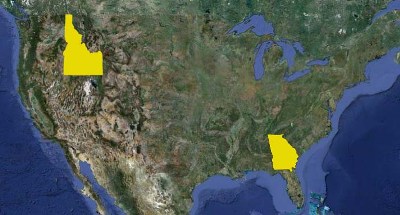
The two states where I knocked on doors of 22 people on the registry for sex crimes committed as juveniles. Top-left: Idaho; bottom-right: Georgia. |
Most of the meetings on this trip came out of the e-mails sent out before it started, with people who invited me to their homes or referred me to other people they knew who were willing to talk with me. But in Georgia and Idaho, I took a different approach.
When my original research for this website brought up pictures of hundreds of kids on the registry,30 I wanted to find out what they had done that was so horrible that even children deserved this kind of public shaming. Georgia and Idaho are two of the states that put their children on the public registry. So in those states, instead of prearranged meetings, I repeated my earlier research by downloading the registries and sorting the entries by date of birth and by date of conviction. This allowed me to pick out people according to who were the youngest at the time that I was there and who were the youngest at the time they were first put on the registry. Next, I organized this list geographically, selected 22 registered young people along driving routes through each state, and began knocking on doors.
Or, should I say, I tried to find the doors to knock on. The first person I looked for was 19 years old and had been convicted of sexual battery at age 17. But his address turned out to be on a street that does not exist in the indicated city. There was a street by that name in a nearby city, so I tried that, but it was only two blocks long and all its numbers were in the 4,000s, whereas the number I was looking for was 676. Residents I asked confirmed there was not another part of the street that continued somewhere else. I crossed this person off my list and went on to look for the next one.
This was a 21-year-old man who had been convicted of child molestation at age 14. I really wanted to know what a 14-year-old boy could do to be charged with child molestation. However, although the street existed this time, and it had the right range of numbers, the specific address provided did not exist. Again, I checked with residents about whether there was something unusual in the street numbering, but no one knew where to find the given address.
How interesting, I thought. These men have been on the registry for two years and seven years, respectively. Both listings indicated a “residence verification date” within the past year. Was that some kind of joke? The government presents these people as so dangerous that we need to keep a constant eye on them, and yet the addresses where we are told to watch out for them, addresses the government claims to have verified, don’t even exist!
Fortunately, that was just a difficult start, and those first two turned out to be the only nonexistent addresses on the list. There were others that didn’t work out, of course. For the only two women on the list, at the address of a 19-year-old woman who’d been convicted of “lewd conduct with a minor child” at age 16 was a vacant house, and for a 30-year-old woman who’d been convicted of child molestation at age 16, the address was for a trailer park, whose manager said she’d been recently evicted and had been arrested a week before I got there. Two teenage boys, a 15-year-old who’d been convicted just six months before of “lewd conduct with minor child under 16 years” and a 16-year-old who’d been convicted when he was 15 of “sexual abuse of a child under 16,” lived in group homes whose management would not allow me to speak with them. At the home of a 19-year-old who had been convicted at age 15 of “lewd conduct with child under 16,” his mother said he was not home and that she herself was on her way out and couldn’t speak with me at that time.
At the other 15 doors, I was warmly received. It was usually dicey at first, with a wary young man or a parent eyeing me suspiciously on the porch to see if they should trust me. All of them soon did, and nobody sent me away without an interview. One boy’s father said on camera with his son that I was an angel for doing this work, for caring about these kids. Just as with older people on the registry, these boys and young men and their families were relieved and grateful just to know there was someone who cared what they were going through. At least one mother had second thoughts afterwards though. A few hours after my interview with her and her 15-year-old son, I got a phone call from the local police department, asking me questions to check out the legitimacy of my research.
Four of the interviews were conducted, with a parent present, with boys between 15 and 17 who had been convicted of a sexual crime when they were either 14 or 15. Another eight were with young men in their 20s who’d been convicted between the ages of 13 and 17. For three of the interviews, the registered person himself was not available. A 21-year-old man who’d been convicted of child molestation at 15 was not home, and I spoke briefly with his mother about his case. A 14-year-old boy who had only recently been convicted of child molestation was in juvenile jail, and I spoke at great length with his distraught parents, who also allowed me to scan their voluminous file of case documents. The door of a 19-year-old convicted at age 14 of “lewd conduct with minor child under 16” was answered by his 14-year-old younger brother, who said his brother had disappeared and they didn’t know where he was. He then served as interpreter when his mother, who spoke no English, allowed me to interview the two of them together.
For brief descriptions of the things these boys are said to have done that landed them on the registry, see Child Sex Criminals above. Georgia and Idaho accounted for 15 of the 25 interviews reported in that section.
This Beautiful Country
For the first half of my trip, I was racing against the clock to get in as many interviews as I could and make it to DC in time for the conference at the end of June. For example, when I got to the vacation paradise of Florida, I drove up and down both coasts of the state in three days, had six meetings in Orlando, Miami, and St. Petersburg, in which I interviewed 16 people, and I don't remember seeing the ocean at all.
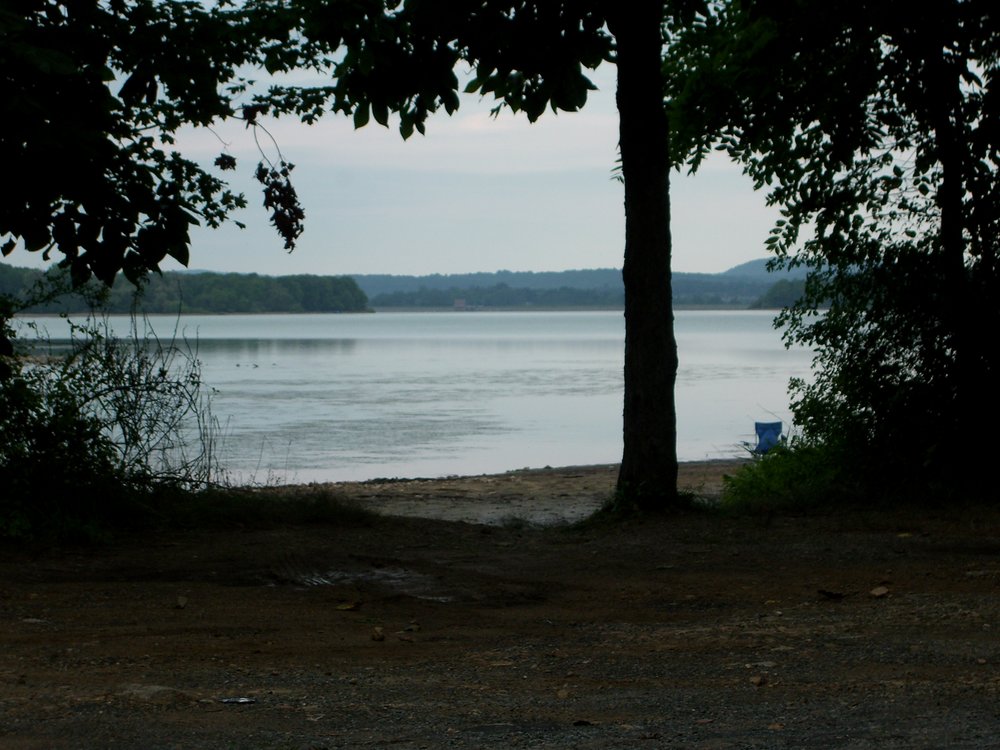
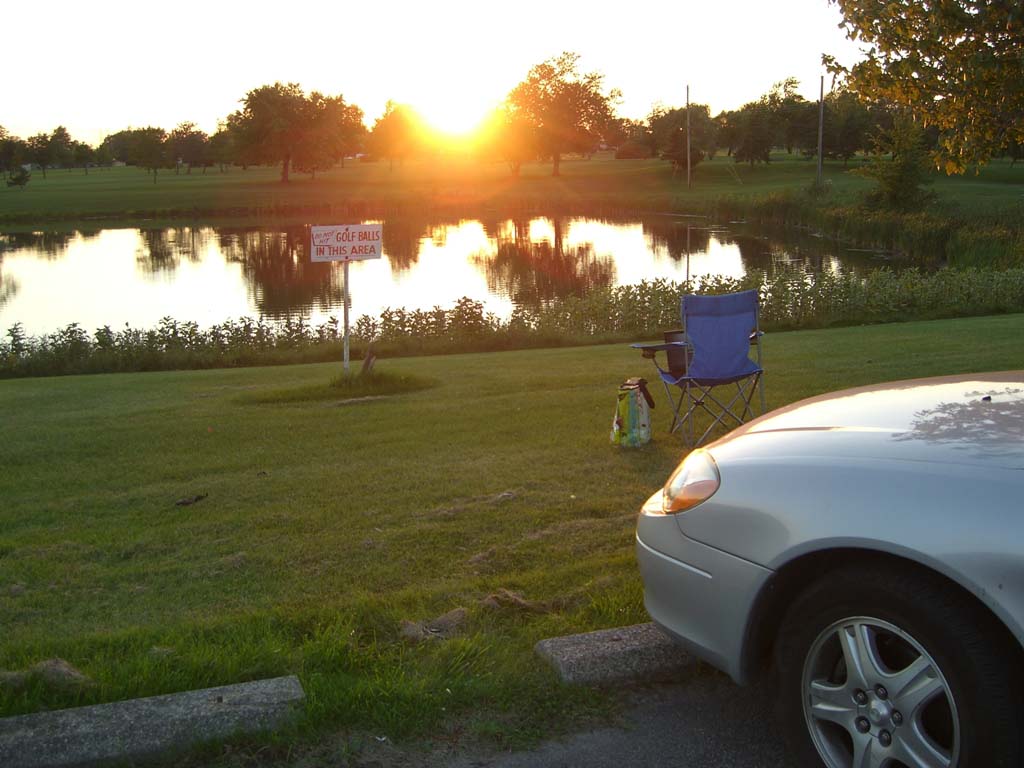
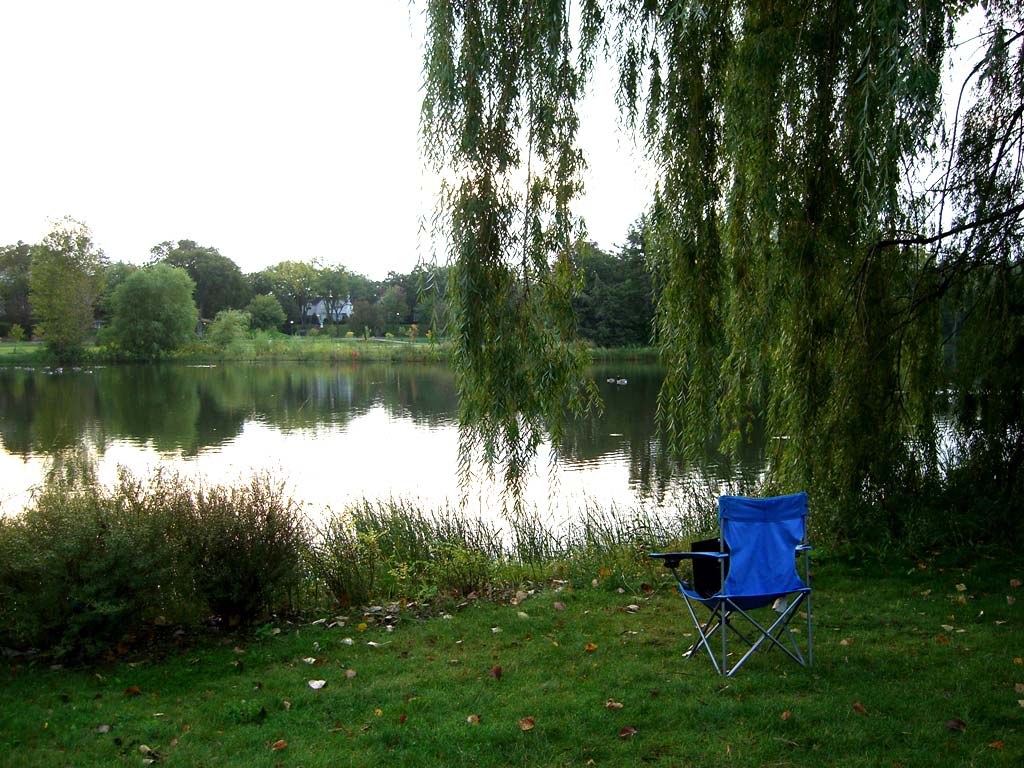
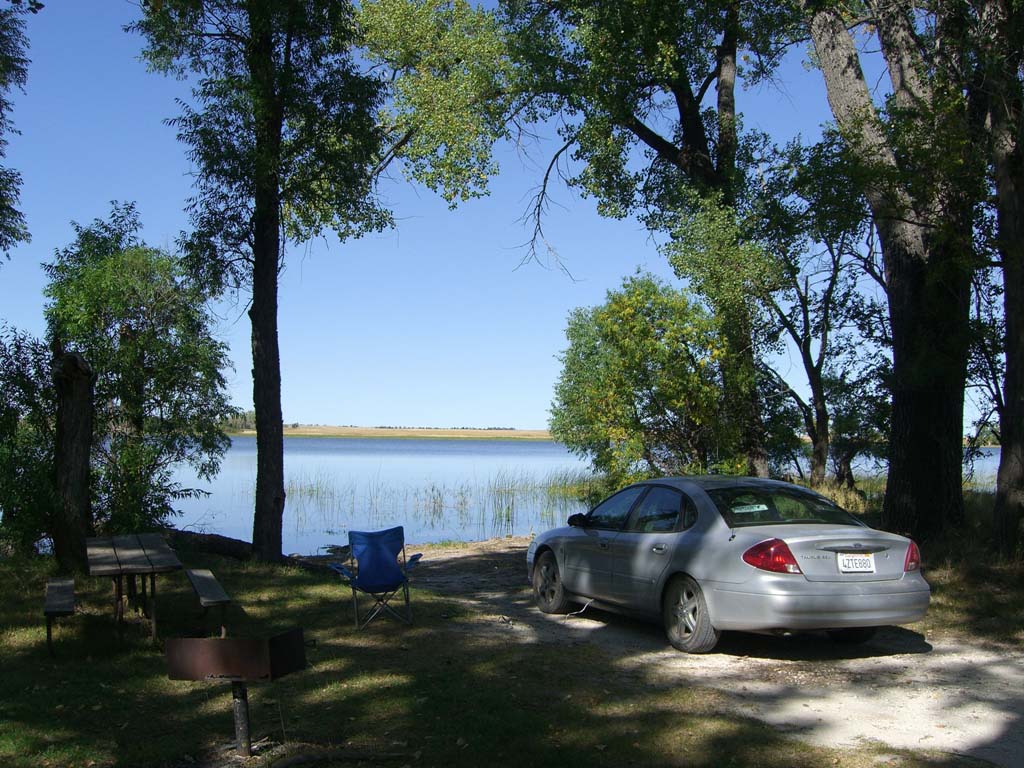
After the conference, I think I slowed down a little bit and let myself start “smelling the roses” along the way. I didn't have a deadline anymore, except for completing my trek across the northern states before winter set in. I bought a collapsible camp chair and started using it to set myself up at interesting waterfront spots to write my notes about the trip and my interviews.

|
|
|
Some of my favorite mobile office locations on the trip: Spruce Run Recreation Area, New Jersey. A secluded road turnout on the shore of Spruce Run Reservoir, New Jersey. Sheridan Park, Buffalo, New York. Lake of the Isles, Minneapolis, Minnesota. Walgren Lake, Nebraska. (Click photos to view larger.) |
There were three places where I was so impressed with the panoramic beauty around me that I stood in one spot with my camera and turned myself in a full circle, taking a series of photographs, which I then knit together into a 360° montage.

|
|
Panoramic photomontage of Nebraska countryside. (View larger.) |

|
|
A mountain/riverscape east of Burns, Oregon. (View larger.) |

|
|
Secluded hilltop overlooking Dinosaur Point, San Luis Reservoir State Recreation Area, California. (View larger.) |
There was one place where I paused my work and became a tourist for a few hours. In the northwest corner of Wyoming, I visited Yellowstone National Park and took in the spectacle of Old Faithful, the famous geyser that spews thousands of gallons of boiling-hot water over a hundred feet in the air roughly every hour and a half. The next day, working on my computer in a picnic area, I was visited by a fox and an elk.


|
|
Yellowstone National Park. Old Faithful Geyser and a grazing elk. (Click photos to view larger.) |
The splendor of these places that I visited along my way stood in stark contrast with the human devastation I was chronicling, one miserable case after another. Some months later, thinking about my work as I looked out over the Pacific Ocean back in Los Angeles, I remember asking myself, how could the world be so beautiful and so ugly at the same time?
The Challenge of Routing
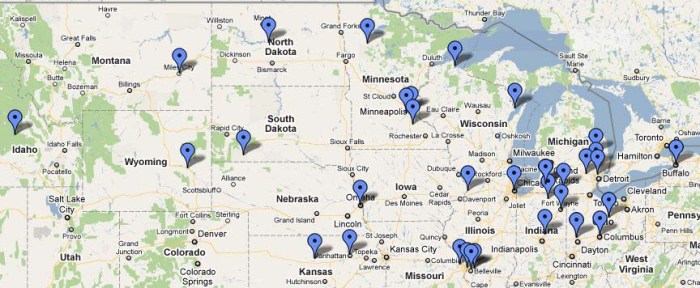
One of the interesting problems of the trip was figuring out how to see as many people as possible without crisscrossing all over the place between them. Near the end of August, I saved a Google map that shows just how difficult this problem could get. The idea of the trip was to make one big circle around the country. When the map below was made, I had driven eastward across the southern states and up the East Coast, and was on my way back west across the northern states. I had just finished conducting an interview in Buffalo, New York, and I made up a list of the places that I wanted to go on the next leg of the trip. There were people to see in Ohio, Michigan, Indiana, Illinois, Missouri, Kansas, Iowa, Nebraska, Wisconsin, Minnesota, both Dakotas, Montana, Wyoming, and Idaho.
|
|
Routing quandary on the Registry Road Trip, August 29, 2010. |
To see them all, I would have had to zigzag several times either north-and-south or west-and-east. The problem with this was not so much the extra distance it would have added to the trip, but that autumn was coming. I didn't want to find myself in the Rocky Mountains in November without snow tires. If you look at the route map below, you can see the choices I made for where to go. These were tough decisions. I completely lost Ohio, Missouri, Kansas, Nebraska, Wisconsin, and Montana, even though I skirted the edges of three of those states on my way to others. I had to make some difficult phone calls to people I'd been hoping to meet, telling them that it just wasn’t going to work out to see them on this trip.
Statistics
I set off from Los Angeles on May 10, 2010, expecting the trip to take until the end of the summer. Instead, I returned on October 27, after 170 days, or 5½ months. In that time, I put 15,209 miles on my car, an average of 89 miles per day, burned approximately 680 gallons of gas, got a speeding ticket in Burley, Idaho, got no parking tickets (Yay!), replaced two flat tires and one dead battery, and blew out my engine in Bismarck, North Dakota.
During that time, I had 113 meetings in 22 states plus the District of Columbia and Ontario, Canada. Of those meetings, 103 were set up specifically for this trip, while the other ten were planned events that I was invited to attend. Five of those were meetings of activist groups, two were sex crime treatment sessions, and the others were a private party in an upscale home, a session of a recovery program, and a meeting in a judge’s chambers that reviewed the case of a man I had interviewed the day before.
|
|
Route of the Registry Road Trip, showing locations of 113 meetings in 22 states, DC, and Canada, from early May through October, 2010. (View larger.) |
A picture of the economic class of the places I visited can be gleaned from census data on the zip codes of places where I met with people in their homes. There were 81 such zip codes on my trip. Using computer software to find the correspondence between these zip codes and selected data from the 2000 census, we find that most of the places I visited had low to moderate annual per capita income between $10,000 and $30,000, household income between $30,000 and $70,000, and house values between $50,000 and $200,000. (Since these numbers are from the 2000 census, these figures are for 1999.) Only a few places were at a lower economic level, and about a dozen were higher.
| Economic Class of Zip Codes with In-Home Meetings | |||||
|---|---|---|---|---|---|
| Annual Income ($1,000s) | Average House Value ($1,000s) | ||||
| Per Person | Per Household | ||||
| 00 to 09.9 | 1 | 020 to 029.9 | 4 | 040 to 049.9 | 1 |
| 10 to 19.9 | 43 | 030 to 049.9 | 36 | 050 to 119.9 | 40 |
| 20 to 29.9 | 26 | 050 to 069.9 | 28 | 120 to 199.9 | 26 |
| 30 to 39.9 | 9 | 070 to 089.9 | 10 | 200 to 299.9 | 11 |
| 40 to 49.9 | 1 | 090 to 099.9 | 2 | 300 to 409.9 | 2 |
| 70 to 79.9 | 1 | 240 to 249.9 | 1 | 770 to 779.9 | 1 |
| Total | 81 | Total | 81 | Total | 81 |
| Source: Census 2000 Summary File 3
(for 5-digit zip code tabulation areas, tables P82, P52, P54, H7, H79)
http://factfinder.census.gov/servlet/DCGeoSelectServlet?ds_name=DEC_2000_SF3_U | |||||
Of the 103 meetings set up specifically for this trip, 58 were one-on-one meetings between me and one other person, and 32 were with two other people. Larger groups ranged up to eleven. Most of the meetings arranged for the trip were one-on-one with a person on the registry and/or family members or friends of one registered person. However, in San Diego, Phoenix, and Dallas, local activists arranged for small groups of people who were not related to each other to meet with me and tell me their stories. The largest meeting, with eleven registered men, was generously arranged for me by the head of the group home where they lived.
The largest number of meetings on one day was four. At 10 am, I went to the home of a woman I’d met a few days earlier to interview her 14-year-old son, who was facing criminal charges for sexual activity with his younger stepsister. At 1:30 pm, I conducted one of my only two interviews of women on the registry. At 5:30 pm, I met up with the parents of a 17-year-old boy and drove a few miles to a juvenile prison, where we were admitted together to visit him, and then they left to allow me to interview him alone. Since I was not allowed to take in either a recording device or note paper, I sat in my car for a couple of hours afterwards to write detailed notes of the meeting from memory. I then drove back to the parents’ home for a late-night interview with them about their ordeal advocating for their incarcerated son. It was after midnight when I finished and walked out into the dark of a warm summer night, feeling somewhat numb.
Among all the meetings, I conducted interviews with 205 people. Most of them fall into one or more of seven broad categories:
- 86 people (78 men, 2 women, and 6 boys between 13 and 17 years old) who had been convicted of or were being prosecuted for a sex crime. Of these, 77 were on the registry (65 public, 12 on the non-public registry), and the remaining nine either had status pending, were convicted of a non-registrable crime, had been removed, or were not on the registry for other reasons. Twenty-one were under 18 at the time of the crime. Three were in the clergy at the time of the crime. Two were incarcerated at the time of the meeting, a 17-year-old boy in juvenile prison and a man in civil commitment.
- 7 people (5 men and 2 women) who engaged in illegal sexual activity for which they had never been prosecuted.
- 74 immediate family members of people who had been convicted of or were being prosecuted for a sex crime (34 mothers, 17 fathers, 10 wives, 4 daughters, 7 sisters, 2 brothers).
- 5 people (4 women, 1 man) identified as victims of someone who is on the registry or in prison for a sex crime committed with them.
- 10 people (8 men, 2 women) who would be designated as victims of child sexual abuse if their older sexual partners when they were juveniles had been prosecuted for it.
- 19 people with an indirect relationship to the sex laws (6 “registry activists,” 6 mental health professionals, 3 lawyers, 1 judge, 1 journalist, 1 clergy, and 1 activist for harsher sex laws).
- 15 pedophiles (all men), meaning people who acknowledged having or appeared to have a predominant sexual attraction to children (11 included in first category above as having been convicted of a sex crime, 2 in second category as having engaged in illegal but unprosecuted sexual activity, 2 stating credibly that they had never engaged in illegal sexual activity).
Of the 113 meetings, 88 were recorded, most on video, some only in audio, according to the permission of the people present. This was done to facilitate further research and analysis by myself, not for broadcast or other dissemination. (Images from the video recordings that are included in this report appear with the explicit permission of the people in them.) Recordings of one-on-one interviews range from 20 minutes to 4½ hours, with an average of just under two hours. There were two mass-interviews recorded, when the organizers of Citizens for Change in Albuquerque and Citizens for Justice in Detroit turned their meetings over to me to go around the room and conduct mini-interviews with each person who wanted to talk, which was almost everyone present. Both of those mass interviews were followed by longer, in-depth interviews with some of the people who had spoken in those meetings. In all, 136 hours of video and 29 hours of audio recordings were made.
On this trip, I traveled with a computer scanner in the back seat of my car for the purpose of collecting documentation, which several people provided. In all, 172 items were scanned, with a total of 1,982 pages. Three of the largest items scanned were treatment manuals, which were 413, 95, and 85 pages long. Two of them were provided in the utmost secrecy by men who were desperately afraid of what would happen to them if the leaders of their meetings knew they were allowing a stranger to see the manuals.
Conclusion
Summary
In a 5-½ month circuit around the United States, I met with dozens of people who are widely despised because of prior convictions for sex crimes — people often known as “registered sex offenders.” Although they are supposed to carry that label to protect children in the community from harm, many of them were mere children when this status was put on them. They live in all manner of places from coast to coast, in cities, suburbs, small towns, and the rural outback. They are found in all walks of life, from penniless to prosperous, but a listing on the registry imposes a severe challenge on finding both employment and housing. The crimes of those I met included:
- Violent rape of an adult woman.
- Doing something sexual with a child (even if the other person was also a child).
- Making attempted arrangements to have sex with a child.
- Having sex with a teenage girlfriend (even if the boyfriend was a teenager close in age).
- Having sex with an adult woman who was drunk.
- A child playing “show me” with a younger child.
- Doing something sexual with someone who is mentally handicapped and therefore not allowed to consent to any kind of sexual activity — ever (three such cases described in this report).
- Possession of child pornography.
Many of my meetings were arranged through political groups that have formed in several states and nationally to advocate for awareness and improvement of circumstances of registered people. In two states, I took addresses from the registry and knocked on doors to meet people who had been convicted of sex crimes committed as juveniles, several of whom were still juveniles when I met them. I also spoke with a woman who believes the sex laws aren’t harsh enough.
Perhaps I can best sum up my observations with the following two conclusions:
- A great many children suffer as a result of the sex laws, and there is little in those laws to reduce harmful effects on children.
- The shaming and hardships imposed on people convicted of sex crimes are in many cases out of proportion to the nature of the crimes committed. Being on the registry makes it very hard for people to have decent employment, housing, or social lives, and these consequences apply without regard to the severity of the crime.
Personal Reflections
The Registry Road Trip was a grueling experience. Sometimes, each interview seemed like just another opportunity to break my heart. As I walked up to one person’s door after another, I found myself asking what I was doing and whether I really wanted to go on. Walking out into the darkness of the night after an interview reached by following directions from Google, I would look around and realize I had no idea where I was and no idea where I was going next.
One of the most difficult feelings to deal with was helplessness. Interviewing a 13-year-old boy with a GPS tracking device on his ankle or a man assigned to live in the corner of an industrial parking lot, I wanted to do more than just listen. When I collected documents from people, I wished that I could offer some hope that I might find a key in them that could wake them from their nightmares. If there were such a key in someone’s case file, would I know it when I saw it? Sometimes I felt guilty for taking up people’s time.
Again and again, I found the reaction of people to my showing up to be gratitude. People were grateful to know that I cared and that I did not judge them or hate them for things they or their loved ones had done. Sometimes people said they’d never told their whole story to anyone else before, and they were grateful that someone was interested in hearing it. Some people said my interviews were like therapy, a cathartic experience of looking deeply inside themselves and gaining new insights on their lives.
I eventually came to see that this was the most important thing about my trip. If I never published anything about the interviews, I was doing something worthwhile just by going around and sitting down to talk with people. Many registered people and their families feel so isolated and afraid. Numerous times I was told what a great relief it was to talk with someone who cared. I am proud of the moments of comfort and peace that I brought into a few people’s lives, a few hours at a time.
So, What Now?
When I saw what a positive experience it was for the people I was visiting, sometimes I thought I ought to do nothing else — just keep driving around visiting people on the registry one after another. With today’s registry, if I visit three a day, I could do it for 600 years before I would have seen them all and have to start over.
But maybe I can do something more useful.
As explained in the Introduction, the descriptions of any cases mentioned in this report are very brief, just one or a few sentences each culled from hours-long interviews. Most people I talked with are not even mentioned at all. What I heard on this trip are important stories that need to be told, and I would like to find a way to tell them.
Although the largest number of interviews were with people on the registry themselves, it may be that the place to start in telling the stories is with the people identified as their victims. People will always be suspicious, with good reason, of what we hear from the people convicted of sex crimes. But what do the victims have to hide? I have been doing research on this group for many years, both before and after this road trip. The trip added 15 interviews to the two dozen others I’ve done before and since. Now that this trip report is finally done, I’m going to take a close look at those interviews and see what I can do to get those stories told.
Thanks and Apologies
To the people who met with me for an interview, thank you for your hospitality and for speaking with me in such depth and with candor about the dark moments of your life. As mentioned above, I wish I could have done more than just listen. Maybe I will find a way to use what I learned from you and others to bring about some positive change in things.
As I made my way across the country, not knowing the nature of what I would find at each stop, I found it became impossible to plan meetings a week or more in advance, as I originally thought I would. This meant my scheduling often took the form of a hasty phone call, “Hi, I’m going to be in your city tomorrow. Can you meet with me in the afternoon?” I apologize for these last-minute arrangements, and I thank you for accommodating me with them when you could.
To people who invited me to meet with you but that I did not get to see, I’m sorry. You can see how busy this trip was. I just was not able to go everywhere I wanted to. There are many people with touching stories that I wanted to hear in detail, but I just was not able to see you all within the limits of this trip.
I also want to thank my friends, Ali and Max, who stayed in touch with me during the trip, helped keep me anchored, and urged me to come home. You will never know how your phone calls and texts buoyed my spirits as I rode the dark highways of the registry.
Footnotes
1. Lawrence v. Texas (2°), US Supreme Court, June 26, 2003 (Link. 539 U.S. 558, Argued 2003 03 26, decided 2003 06 26)2. Criminalizing Child’s Play by Marshall Burns, SOL Research, January 28, 20093. Look Who’s on the Registry Now! by Marshall Burns, SOL Research, January 10, 20084. Sex Crime Sentencing by Marshall Burns, SOL Research, January 28, 20095. Collateral Damage: Family Members of Registered Sex Offenders (2°, ☀) by Jill Levenson and Richard Tewksbury, American Journal of Criminal Justice, January 15, 2009. See especially section on Impact on children of RSOs and Table 5: Psychosocial Consequences to Children of RSOs.From the abstract: “Children of RSOs reportedly experienced adverse consequences including stigmatization and differential treatment by teachers and classmates. More than half had experienced ridicule, teasing, depression, anxiety, fear, or anger.”6. Dr. Pusey on the Besetting Trial Of Our Boys by Lionel Beale, Medical Times and Gazette (London, United Kingdom), December 22, 1866 (Google Books. V. II, # 860, Letter to the editor), page 6817. The Diseases of Infancy and Childhood by Luther Emmett Holt, D. Appleton & Company, 1897 (Google Books), page 6988. Woman's Medical Book by Elizabeth Sloan Chesser, Every Woman's Encyclopaedia, 1910..12 (Date stated on Archive.org page) (Archive.org. V. 3, pg 1585..92), Blisters and Leeches, page 15889. A Practical Treatise on the Causes, Symptoms, and Treatment of Spermatorrhœa by François Lallemand, Blanchard and Lea, 1858 (Google Books), page 12010. An Appliance to Prevent Masturbation by Everett Flood, Boston Medical and Surgical Journal, July 12, 1888 (Google Books. V. 119, # 2), page 3411. Treatment of Masturbation (☀) by M. R. C. P. Lond, British Medical Journal, December 7, 1889 (buy. V. 2, # 1510, pg 1315)12. The Forms, Complications, Causes, and Treatment of Consumption and Bronchitis by James Copland, Longman, Green, Longman, and Roberts, 1861 (Google Books), page 12613. “Occasionally infibulation has been used as a means of preventing masturbation. …” (Google Books. pg 754, first full paragraph) (Case brief in Anomalies and Curiosities of Medicine by George M. Gould and Walter L. Pyle, Rebman Publishing Company, 1898 (Google Books))14. Plain Facts for Old and Young by John Harvey Kellogg, Ayer Publishing, 1888 (Google Books), page 29615. The Origin of Life and Process of Reproduction in Plants and Animals: With the Anatomy and Physiology of the Human Generative System, Male and Female, and the Causes, Prevention and Cure of the Special Diseases to which it is Liable ; a Plain, Practical Treatise, for Popular Use by Frederick Hollick, D. McKay, 1878 (Google Books), page 58216. Masturbation in the Adult by Edgar J. Spratling, Medical Record, W. Wood, September 28, 1895 (Google Books. V. 48, # 13, pg 442..3), page 44317. The Surgical Diseases of the Genito-Urinary Tract, Venereal and Sexual Diseases by George Frank Lydston, F.A. Davis Company, 1900 (Google Books), page 56618. "Diabolism at the Imbecile Asylum.", Kansas Medical Journal, September 1, 1894 (Google Books. V. VI, # 35, pg 455..6, Editorial), page 45519. A Radical Treatment for Masturbation by J.C. Pennington, Medical Record, May 29, 1886 (Google Books. pg 640, bottom-right column)20. “Black details the history of a young man of nineteen …” (Google Books. pg 734, first paragraph) (Case brief in Anomalies and Curiosities of Medicine by George M. Gould and Walter L. Pyle, Rebman Publishing Company, 1898 (Google Books))21. Is it hard for a person on the registry to find a place to live, even if he or she has money?, SOL Research, August 24, 200722. Amended Instruction Regarding Registered Sex Offenders in Public Libraries (☀) by Richard J. Berry, Mayor, City of Albuquerque (New Mexico), May 6, 2010 (Amended Executive Instruction No. 25, with cover letter as mailed to RSO library card holders on 2010 05 07)23. William T. Habern, Habern, O’Neil, & Pawgan L.L.P., Huntsville, Texas24. A Brief History of St. Stephen’s Church, St. Stephen and the Incarnation Episcopal Church, Washington, DC25. 93 participants plus 7 speakers, from 25 states (CA, CO, CT, DC, DE, FL, GA, IL, IN, KY, MA, MD, ME, MO, NC, NH, NJ, NM, NY, OH, OK, PA, TX, VA, VT). Data from Paul Shannon, e-mail of August 5, 2010.26. More is Not Better: Addressing the Overuse of Sex Offender Surveillance (☀) by Chrysanthi Leon, Second Annual Reform Sex Offender Laws Conference (Washington, District of Columbia), June 26, 2010 (Presentation handout)27. Lobbying on SORNA (☀) by Amy Borror, Second Annual Reform Sex Offender Laws Conference (Washington, District of Columbia), June 27, 2010 (Presentation handout)28. Sex Offenses 101 (☀) by Norm Pattis, Second Annual Reform Sex Offender Laws Conference (Washington, District of Columbia), June 27, 2010 (Presentation handout)29. Cheryl A. Carpenter, Carpenter Law, Redford, Michigan30. Criminalizing Child’s Play by Marshall Burns, SOL Research, January 28, 2009
Page posted on August 15, 2010, major revision on August 13, 2012, updated January 28, 2014.
Page copyright © 2010..2014, SOL Research. All rights reserved.